Climatic Shifts Reshaping Performance Patterns Across Soccer Fixtures, Racing Circuits, and Tennis Tournaments
Taylor Koch · Aug 14, 2026
Climatic Shifts Reshaping Performance Patterns Across Soccer Fixtures, Racing Circuits, and Tennis Tournaments
Climatic shifts have altered environmental conditions across multiple sports in measurable ways, with rising average temperatures and changing precipitation patterns documented by meteorological agencies worldwide. Data collected through 2026 shows consistent increases in heat-related variables that directly influence athlete output and event logistics in soccer, horse racing, and tennis. Observers note these changes through performance metrics rather than isolated incidents, as leagues and governing bodies track variables like core temperature, recovery times, and surface conditions over extended seasons.
Heat and Humidity Effects in Soccer Competitions
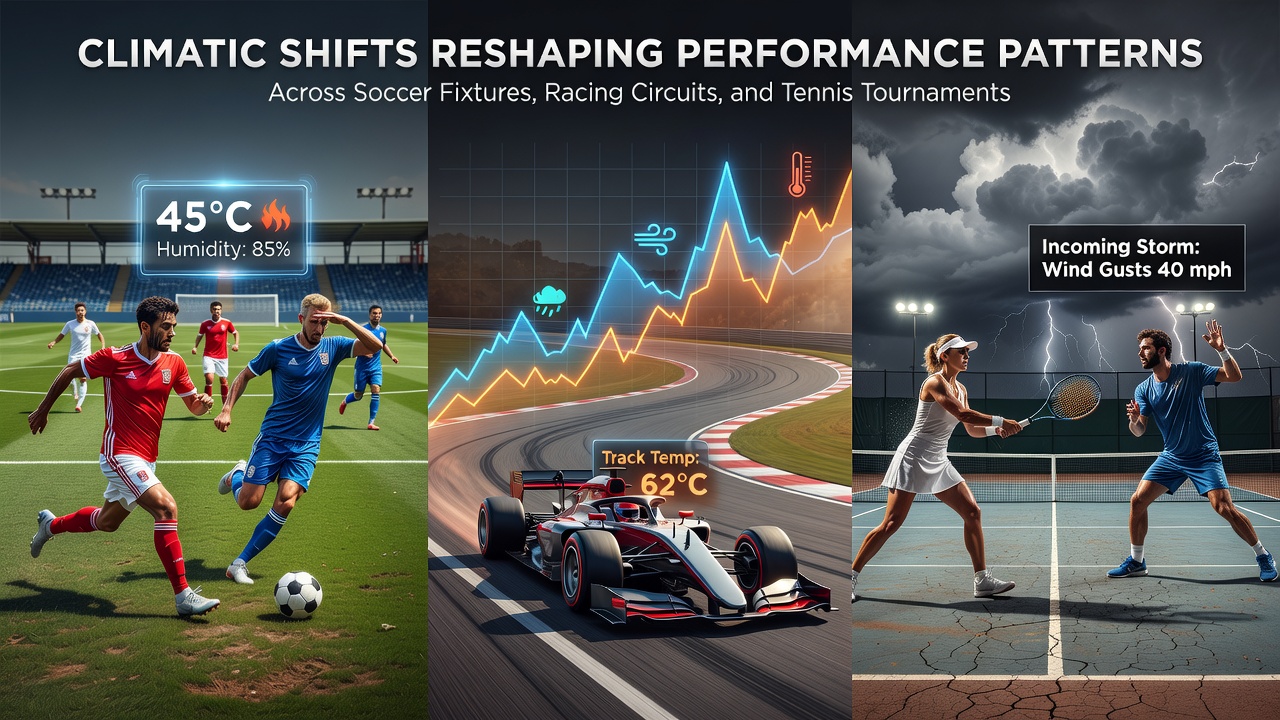
Soccer fixtures now occur under temperature profiles that exceed historical baselines in many regions, with European leagues recording more matches above 30 degrees Celsius during summer months. Research from the European Environment Agency indicates that player sprint distances decline by measurable percentages when ambient heat combines with high humidity, while hydration requirements increase accordingly. In August 2026, fixtures across southern Europe and parts of Asia continued to demonstrate these patterns, as match schedules overlapped with peak seasonal warmth documented in national weather services. Teams have responded by adjusting training protocols and introducing more frequent cooling breaks, though fixture congestion remains a constant factor that amplifies cumulative fatigue across player squads.
Track Conditions and Equine Responses in Racing Events
Racing circuits face altered ground conditions stemming from variable rainfall and elevated surface temperatures, which affect both horse physiology and race timing. Studies coordinated through Australian racing authorities have recorded faster evaporation rates on turf tracks during warmer periods, leading to firmer surfaces that influence stride length and injury risk profiles. Jockeys and trainers observe that horses exhibit different sweat responses and recovery intervals when ambient temperatures climb above established thresholds, prompting schedule modifications at certain venues. Data compiled through mid-2026 illustrates these adjustments in multiple jurisdictions, where race distances and start times have shifted to mitigate peak heat exposure without altering overall competition calendars.
Player Endurance and Court Dynamics in Tennis Tournaments
Tennis events, particularly those on outdoor hard and clay courts, register direct correlations between rising court temperatures and rally lengths, with players covering greater distances under thermal stress. Research published through Canadian university sports science programs shows elevated heart rates and reduced serve accuracy in matches exceeding 32 degrees Celsius on court surfaces, while ball bounce characteristics change with humidity fluctuations. Grand Slam organizers have incorporated these observations into scheduling frameworks, extending rest periods between sets during heat alerts. Throughout 2026, tournaments in North America and Australia continued to apply these protocols, reflecting consistent environmental data rather than temporary measures.
Integrated Data Across Disciplines
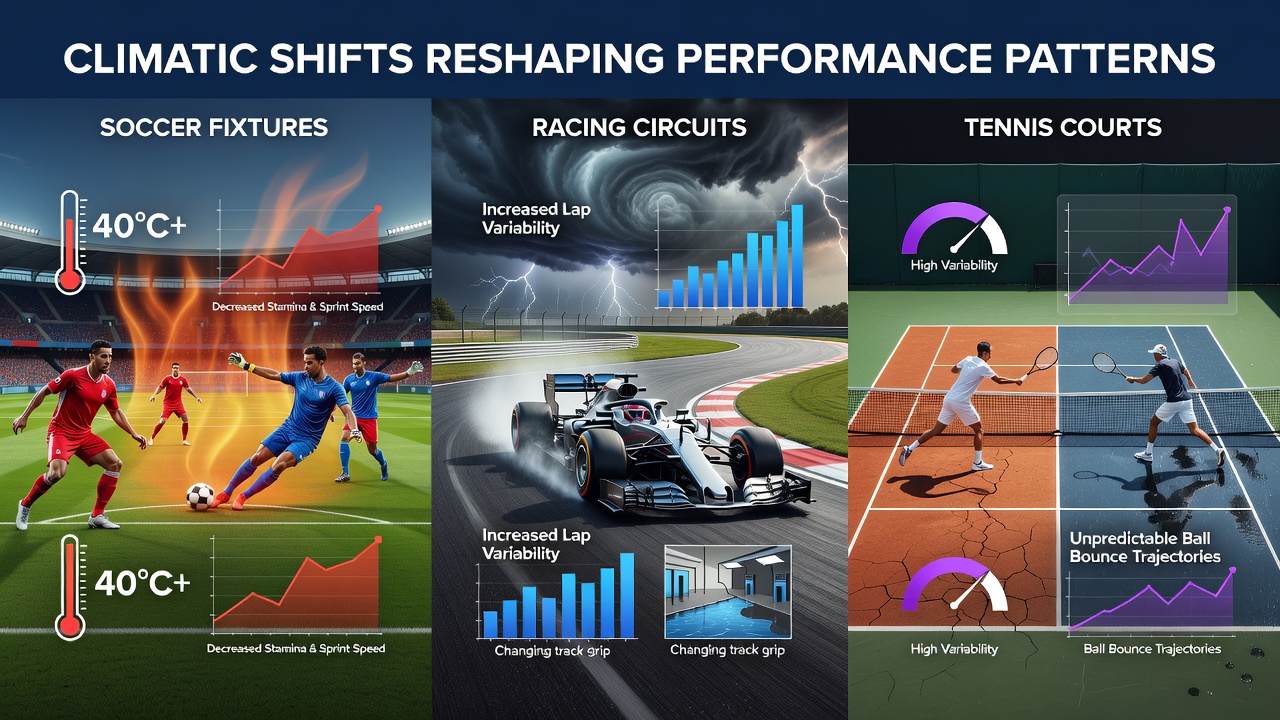
Cross-sport analyses reveal overlapping mechanisms where climatic variables affect decision-making speed and error rates in all three activities. Figures from the World Meteorological Organization track global temperature anomalies that align with performance deviations recorded by sports federations, though regional differences persist based on infrastructure and acclimatization programs. Those who monitor longitudinal statistics note that August periods have shown progressive shifts in event outcomes tied to these environmental factors, prompting governing bodies to refine heat policies across continents. Adaptations include modified equipment standards and venue modifications that address both immediate safety and long-term sustainability requirements.
Conclusion
Climatic shifts continue to influence performance patterns through documented changes in temperature, humidity, and surface conditions across soccer, racing, and tennis. Evidence from meteorological records and sports science studies demonstrates measurable impacts that organizations address through schedule adjustments and physiological monitoring. As patterns observed through August 2026 indicate ongoing evolution in these environmental factors, data collection remains central to understanding future adjustments in competition structures.